

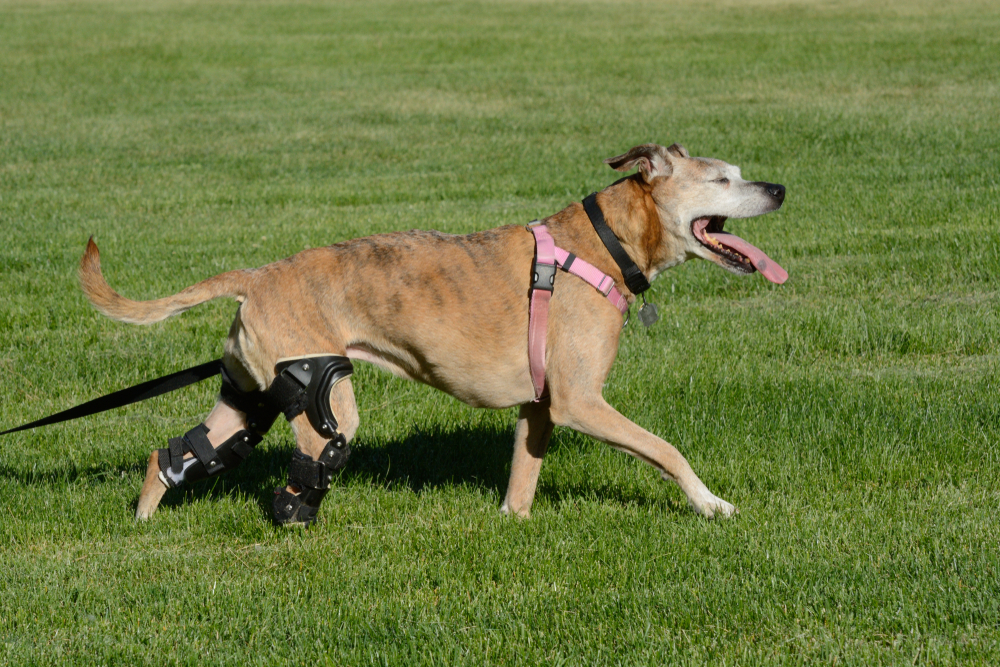
My Dog Tore a CCL: Now What? A Practical Guide for Pet Owners
That Sudden Limp That Changes Everything
You’re in the backyard, your dog takes off after a squirrel, and then you hear it: a yelp, a stumble, and suddenly they’re holding up a back leg. Or maybe there was no dramatic moment at all. Maybe your dog has just been a little off for a few weeks, and the limp keeps getting worse.
When a dog tears their cranial cruciate ligament (CCL), it’s one of the most common orthopedic injuries veterinarians see, and one of the most stressful for owners to navigate. The good news is that there are well-proven treatment options, and most dogs get back to comfortable, active lives with the right plan. The key is understanding what’s happening in the knee, knowing your options, and not waiting too long to act.
At Wales Animal Clinic in Wales, WI, every surgical decision is focused on the details of your pet’s life and what the best care looks like for your family. Our surgery services include advanced anesthesia safety, continuous monitoring, and individualized pain control, and our team will walk you through repair options so you feel confident in the path forward. If your dog is limping, please contact us so we can start with an evaluation.
What Is a CCL, and What Happens When It Tears?
The CCL is the ligament inside the knee that keeps the shin bone (tibia) from sliding forward relative to the thigh bone (femur). It’s the same job the ACL does in a human knee. When the CCL tears, either partially or completely, the knee becomes unstable. Every step involves that sliding motion, which irritates the joint, causes swelling, and hurts.
Unlike ACL tears in people, which tend to happen during a single dramatic event, canine cruciate ligament injuries often develop gradually. The ligament weakens over time from a combination of genetics, body weight, conformation, and daily wear. That’s why many dogs don’t have a clear “moment of injury.” They just slowly get worse until the limp becomes impossible to ignore.
What Makes Some Dogs More Likely to Tear a CCL?
Several factors stack the odds against certain dogs:
- Breed: Labrador Retrievers, Rottweilers, Golden Retrievers, and other medium-to-large breeds face higher risk due to their structure and activity level.
- Weight: Extra body weight puts constant strain on the knee, accelerating ligament breakdown.
- Activity patterns: Weekend-warrior exercise (mostly sedentary with occasional bursts of intense play) is harder on joints than consistent, moderate activity.
- Age: While tears can happen at any age, middle-aged dogs are especially vulnerable.
- Prior knee strain: Dogs who have had issues with one knee are significantly more likely to tear the CCL in the other.
To lower risk, we personalize weight and conditioning strategies during wellness and prevention visits, including nutrition counseling and activity plans tailored to your dog’s breed and lifestyle.
How Can You Tell If Your Dog Tore Their CCL?
Most dogs show a sudden or worsening limp in a back leg. Some dogs toe-touch lightly but won’t fully bear weight, while others refuse to use the leg altogether. The limp often gets worse after exercise and improves with rest, only to come right back.
Signs to watch for:
- Hind-limb lameness that gets worse after activity
- Difficulty rising, jumping into the car, or going up stairs
- Visible swelling around the knee
- A stiff, guarded gait after resting
- Sitting with one leg kicked out to the side instead of tucked underneath
If you’re wondering why your dog is limping, our diagnostics team can confirm the cause and get a plan in motion.
How Do Veterinarians Confirm a CCL Tear?
Most CCL tears are confirmed through a hands-on orthopedic exam combined with imaging. The goal is to identify instability, rule out other problems, and create a precise treatment plan.
We start with careful palpation tests that assess how the knee moves under gentle pressure. A positive “drawer sign” or “tibial thrust” confirms that the tibia is sliding forward, which means the CCL isn’t doing its job. Sedation is sometimes needed to get an accurate exam, since tense muscles can mask instability.
X-ray imaging helps evaluate bone alignment and secondary changes like fluid buildup or early arthritis, and it’s essential for surgical planning. We also use it to rule out other causes of limping, like broken bones or bone cancer. For complex cases or when more soft-tissue detail is needed, MRI can clarify the picture. Our clinic offers timely diagnostics with digital radiography, ultrasound when indicated, and access to specialty consultations.
What Happens If a CCL Tear Goes Untreated?
This is one of the most important questions owners ask, and the honest answer is that untreated CCL tears almost always get worse. The knee doesn’t heal on its own because the instability doesn’t resolve without intervention.
Here’s what typically happens over time:
- Arthritis accelerates. Every step on an unstable knee grinds cartilage and inflames the joint. The longer a tear goes without stabilization, the more arthritis develops, and that arthritis is permanent even after surgery.
- Meniscal damage. The meniscus is a cushion of cartilage inside the knee, and an unstable joint puts it at high risk for tearing. A torn meniscus adds a new source of pain and often needs to be addressed during surgery. The longer you wait, the higher the chance of meniscal injury.
- Muscle loss. Dogs shift weight off the painful leg, and the muscles in that limb weaken quickly. Significant muscle loss makes surgery harder and recovery longer.
- The other knee is at risk. Studies suggest that 40 to 60 percent of dogs who tear one CCL will eventually tear the other. Part of this is genetic predisposition, but compensating for a painful leg puts extra load on the opposite knee and can speed up the process.
- Chronic pain and reduced mobility. Without treatment, most dogs settle into a pattern of ongoing lameness, stiffness, and declining activity. They may still get around, but they’re not comfortable.
Conservative management (rest, anti-inflammatories, weight loss, and rehabilitation) can be appropriate for some very small dogs or patients who aren’t surgical candidates, but for most dogs, surgery provides the most reliable path to long-term comfort and function.
What Are the Surgical Options for CCL Repair?
Three surgical approaches are commonly used to stabilize the knee after a CCL tear. All three aim to eliminate the painful sliding motion and slow arthritis progression. The right choice depends on your dog’s size, age, activity level, and the specifics of their knee.
TPLO (Tibial Plateau Leveling Osteotomy)
TPLO changes the angle of the top of the tibia so that the knee no longer needs the CCL to stay stable during weight-bearing. The bone is cut, rotated, and secured with a plate and screws. It’s widely considered the gold standard for medium-to-large and active dogs because it provides excellent long-term stability under higher forces. Recovery involves strict activity restriction for 8 to 12 weeks, followed by a gradual return to normal exercise.
TTA (Tibial Tuberosity Advancement)
TTA takes a different mechanical approach. Instead of changing the slope of the tibial plateau, TTA advances the front of the tibia forward, which changes the angle of the patellar tendon and neutralizes the sliding forces in the knee. It’s another strong option for medium-to-large dogs. Some surgeons prefer TTA for certain tibial plateau angles, and recovery timelines are similar to TPLO. Both procedures produce good outcomes when matched to the right patient.
Extracapsular (Lateral Suture) Repair
The lateral suture technique places a strong synthetic suture outside the joint to mimic the function of the torn ligament. It works well for many small-to-medium dogs and lower-activity patients. It’s a less invasive procedure than TPLO or TTA and doesn’t involve cutting bone, which some owners find reassuring. The tradeoff is that the suture may stretch over time in larger or very active dogs, making it less durable for those patients.
How Do You Choose the Right One?
The decision often comes down to body size, activity goals, and how the knee looks on exam and imaging.
- Larger, athletic dogs usually do best with TPLO or TTA because the repair needs to withstand higher forces over years of activity.
- Small-to-medium dogs with moderate activity levels may be great candidates for extracapsular repair.
- Pre-existing arthritis, bilateral knee issues, or other health conditions can influence the choice.
- Your comfort level and financial considerations matter too, and we’ll be straightforward about what each option involves.
At Wales Animal Clinic, surgical safety is enhanced with advanced anesthesia monitoring, dedicated surgical staff, and individualized pain control through our surgery services. We’ll review imaging, discuss recovery timelines, and set realistic activity goals during your consult.
What Does Recovery Look Like?
Recovery from CCL surgery is a process, not a single moment. Structured rehabilitation protects the repair, rebuilds muscle, and restores range of motion. Consistency and patience matter more than speed.
The First Few Weeks: Crate Rest and Controlled Movement
Limiting movement immediately after surgery protects the repair and prevents re-injury. That means crate rest or confinement to a small area, leash walks only for bathroom breaks, and no running, jumping, or rough play. This phase is often the hardest, especially with an energetic dog. Creating a calm space with familiar bedding, safe chew toys, food puzzles, and a predictable routine makes it more manageable. Practical tips for surviving crate rest with your dog can help you and your dog get through this phase with less stress.
Building Back Strength
As healing progresses, guided physical therapy, controlled leash walks, and progressive home exercises form the core of recovery. Many dogs also benefit from hydrotherapy or laser therapy to reduce pain and support mobility. A phased rehabilitation plan outlines priorities at each stage.
Most dogs are moving well by 8 to 12 weeks and return to near-normal activity by 4 to 6 months, though every dog heals at their own pace. We partner with local rehab resources and provide detailed home plans, progress checks, and tailored adjustments.
How Can You Protect Your Dog’s Joints Long-Term?
Home care is where healing becomes habit. Small daily decisions add up to stronger joints and fewer setbacks.
- Follow a staged activity plan with short, frequent leash walks that gradually lengthen.
- Use non-slip rugs, ramps, and minimize stairs during early recovery and beyond.
- Practice gentle range-of-motion exercises under veterinary guidance.
- Keep a simple log of activity, limping, and mood to catch patterns early.
- Use joint supplements with glucosamine and chondroitin to promote healthy cartilage
- Maintain a steady weight and feed a balanced diet to reduce joint load.
- Build in warm-ups and cooldowns before and after exercise, especially for active or athletic dogs.
Our wellness and prevention visits include nutrition counseling and exercise plans tailored to age, breed, and lifestyle.
Frequently Asked Questions
Can a CCL tear heal without surgery? The ligament itself doesn’t regrow or reattach. Some very small dogs (under about 15 pounds) may stabilize with strict rest, weight management, and rehabilitation, but most dogs do significantly better with surgical repair. Without surgery, arthritis tends to progress and the meniscus is at higher risk for damage.
Will my dog need surgery on the other knee too? Not necessarily, but the risk is real. Studies suggest 40 to 60 percent of dogs with one CCL tear will eventually develop a problem in the opposite knee. Maintaining a healthy weight, consistent exercise, and prompt treatment of the first knee are the best ways to protect the second one.
How long before my dog can run and play again? Most dogs return to comfortable off-leash activity by 4 to 6 months after surgery, depending on the procedure and how well rehabilitation goes. The timeline varies, and pushing too fast can set things back. Your veterinary team will guide the progression.
Is one surgery better than the others? Each technique has strengths. TPLO and TTA are generally preferred for larger, more active dogs. Extracapsular repair works well for smaller dogs with moderate activity. The best choice is the one that fits your dog’s size, lifestyle, and health profile, and we’ll help you work through that decision.
Getting Your Dog Back to Doing What They Love
A torn CCL is a significant injury, but it’s also one of the most treatable orthopedic problems in dogs. With the right diagnosis, surgical plan, and commitment to recovery, most dogs get back to comfortable, active lives. The earlier you act, the more options you have and the better the long-term outcome.
If your dog is limping or has been diagnosed with a CCL tear, our team is ready to help. At Wales Animal Clinic, we’re here to be your partner through diagnosis, treatment, and recovery. Contact us to schedule an appointment today.

Leave A Comment