

Watching a pet hesitate before standing, struggle on slick floors, or avoid the stairs they once bounded up can be heartbreaking. You want to help, but it’s hard to know where to start. Many pet owners feel helpless when mobility changes creep in gradually, leaving them wondering if there’s something that could make daily life easier and safer.
The good news is that assistive devices like harnesses, carts, and traction aids can bridge that gap between struggle and stability. These tools offer support while letting pets stay engaged in their routines and connected to family life. The right device can transform uncertainty into movement that feels manageable again.
At Wales Animal Clinic, we take a personal approach to mobility concerns, focusing on your pet’s unique needs, species, and lifestyle. With thoughtful guidance and clear next steps, we help families decide when assistive devices make sense and how to use them alongside medical care. Reach out to start a plan centered on comfort, independence, and trust.
When Does Your Pet Need Extra Mobility Support?
Mobility assistance isn’t about admitting defeat. It’s about providing safe support so your pet can keep moving with confidence. These changes often develop so gradually that it’s hard to pinpoint when things shifted, but your instincts are usually right: if something seems off, it’s worth investigating.
Osteoarthritis is one of the most common reasons pets need extra help, but there are many other causes. Post-surgical recovery, neurological conditions affecting strength or coordination, congenital issues present from birth, and life after amputation or injury can all benefit from assistive support.
Early signs to watch for include:
- Stiffness after resting or reluctance to rise from lying down
- Shorter strides or a changed gait
- Scuffing or dragging paws
- Hesitation at stairs or reluctance to jump
- Slipping on smooth floors
- Decreased interest in walks or play
Some pets need temporary support while healing, while others benefit from long-term assistance for chronic conditions. Either way, early intervention improves quality of life and helps prevent secondary injuries from falls or compensation patterns.
Our wellness and preventative care includes thorough physical examinations that catch mobility changes early. Identifying the underlying cause, whether it’s joint disease, nerve dysfunction, or something else entirely, helps us choose the right support strategy.
What Spinal Conditions Require Mobility Support?
How Does Intervertebral Disc Disease Affect Movement?
Intervertebral disc disease (IVDD) occurs when the cushioning discs between vertebrae rupture or bulge, putting pressure on the spinal cord. This can cause anything from mild back pain and reluctance to jump to rear leg weakness, dragging limbs, or complete paralysis.
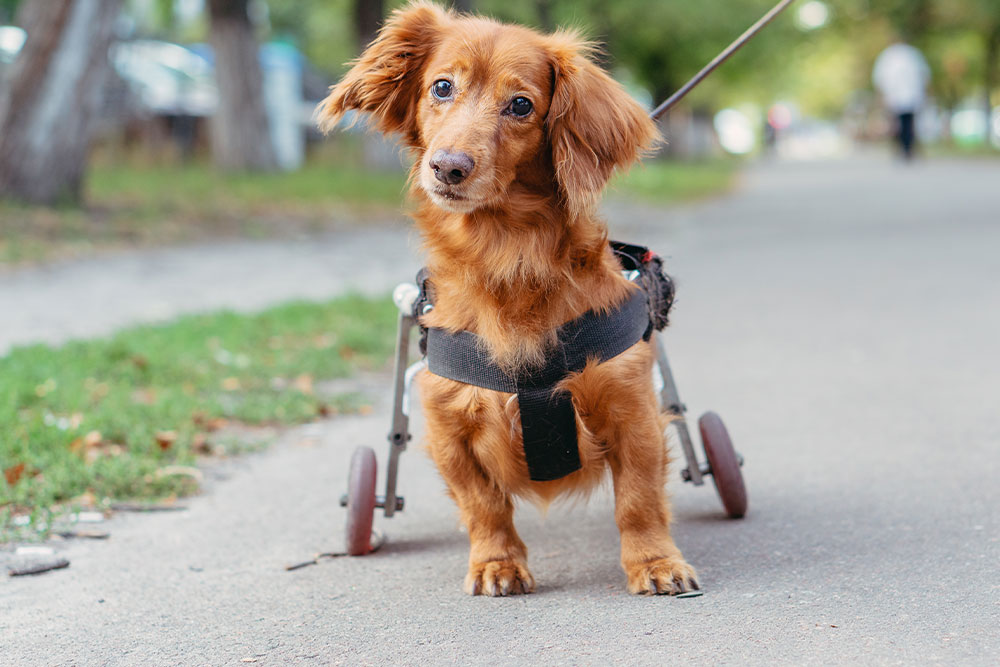
Dachshunds, Beagles, Corgis, and other long-backed breeds face higher risk, but any dog can be affected. Symptoms may appear suddenly after a jump or fall, or develop gradually over time. During recovery (and sometimes permanently), support harnesses help pets stand and walk safely. Many dogs regain significant function with proper care, though some need ongoing assistance. For those permanently paralyzed, carts or wheelchairs can provide long-term mobility.
What Is Degenerative Myelopathy and How Is It Managed?
Degenerative myelopathy is a progressive spinal cord disease most commonly seen in German Shepherds, Boxers, and related breeds. It typically begins in middle-aged to senior dogs with subtle rear leg weakness and poor coordination that owners often mistake for arthritis or hip problems.
The disease progresses over months to years, with weakness eventually advancing to affect all four limbs. While there’s no cure, supportive care helps maintain quality of life for as long as possible.
Mobility aids become essential as the disease advances. In early stages, nail grips and booties can protect paws and provide traction. A rear support harness helps with standing and navigating obstacles. As weakness increases, full-body harnesses or mobility carts can restore independence and keep dogs engaged in family activities. Physical therapy, controlled exercise, and careful monitoring complement these tools and help dogs stay comfortable throughout the disease course.
How Does Hip Dysplasia Affect Mobility?
Hip dysplasia develops when hip joints form abnormally, causing looseness, instability, and eventual arthritis. Large and giant breeds face higher risk, though it can occur in dogs of any size.
Some dogs show signs as young puppies, while others don’t develop noticeable symptoms until arthritis worsens later in life. Support harnesses reduce strain on painful hips during walks and help dogs rise more easily from lying down. Combined with medical management and home modifications, harnesses help dogs with hip dysplasia maintain comfortable activity levels for years. The goal isn’t to push pets beyond their limits but to support them in doing what they can, safely and without pain.
How Can Mobility Aids Help After Cancer Treatment or Amputation?
What Happens When Bone Cancer Requires Limb Removal?
Osteosarcoma is an aggressive bone cancer most common in large and giant breed dogs. It typically affects the limbs and causes progressive lameness, swelling, and significant pain. Treatment often involves amputation surgery to remove the tumor and provide pain relief, frequently combined with chemotherapy to slow the spread of disease.
The decision to amputate a limb feels overwhelming for most pet owners. It’s natural to worry about how your pet will cope. But here’s what consistently surprises families: most dogs adapt remarkably well to life on three legs. They don’t dwell on what’s missing. They adjust, compensate, and get back to the business of being dogs.
Recovery typically takes several weeks. During this time, support harnesses help pets navigate stairs, slippery floors, and outdoor terrain while building confidence and strength in their remaining limbs.
What Support Do Pets Need After Limb Loss?
During initial recovery, harnesses provide crucial stability as pets learn their new center of gravity. Some three-legged dogs continue using harnesses long-term for added support on challenging surfaces or during longer outings, while others become so steady they rarely need assistance.
Front-leg amputees often benefit more from ongoing harness support than rear-leg amputees, since the front legs carry more of a dog’s weight. But individual needs vary widely based on size, age, overall health, and activity level.
The key is matching support to your pet’s abilities and comfort as they adapt to their new normal. What they need in week two may be very different from what they need in month six.
What Types of Assistive Devices Can Help Your Pet?
Support Harnesses: Stability Where It’s Needed Most
Support harnesses redistribute weight and let you assist exactly where your pet needs help. They’re valuable for pets with arthritis, rear or front limb weakness, balance issues, or during recovery from surgery or injury.
Options include:
- Rear support harnesses for hindquarter weakness
- Front support harnesses for front leg issues
- Full-body harnesses for pets needing comprehensive support
Proper fit is essential. A harness should be snug but comfortable, with padding at pressure points to prevent rubbing. Measure carefully following manufacturer guidelines, and check the fit regularly as your pet’s condition changes.
Most pets adjust quickly when harnesses are introduced gradually with positive reinforcement. Start with short sessions, pair the harness with treats and praise, and build duration over time. If you’re not ready to invest in a harness, even a bath towel slung under your pet’s abdomen can provide temporary support for rising and walking.
Some pets need a harness briefly during recovery; others benefit from daily use for chronic conditions. We can help you determine what makes sense for your situation.
Mobility Carts: Independence on Wheels
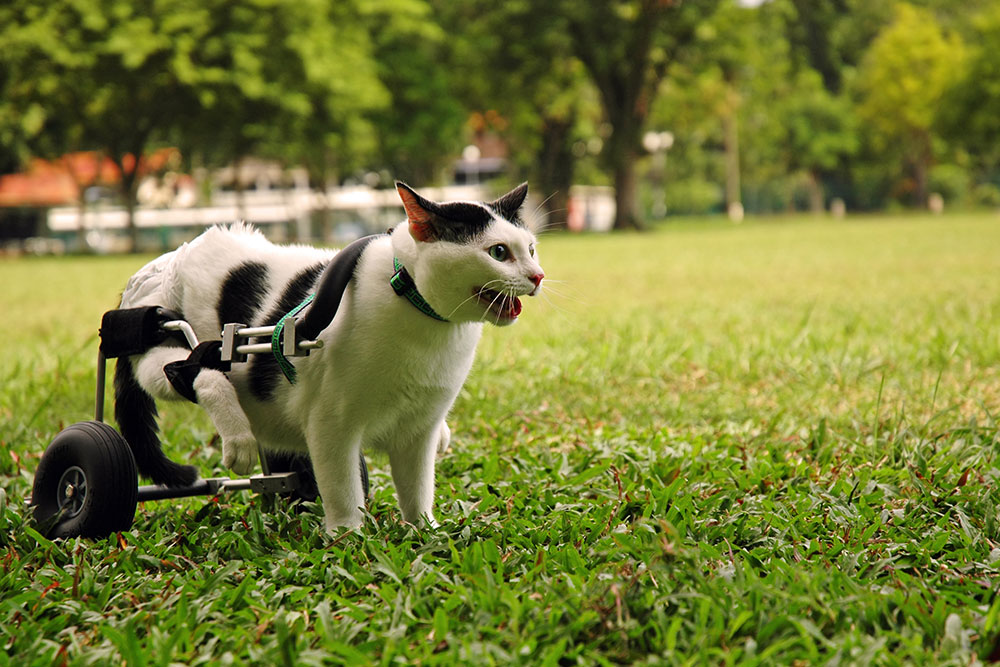
Mobility carts support weak or paralyzed limbs so pets can move using their stronger legs. They’re often life-changing for pets with advanced rear leg weakness, paralysis, or conditions like degenerative myelopathy.
Many pets adapt to carts faster than their owners expect. The key is proper introduction:
- Start in a familiar, open space with good footing
- Keep first sessions short and rewarding
- Use treats and encouragement to build positive associations
- Check regularly for rubbing at skin contact points
- Adjust straps and fit as needed
Custom carts offer the best fit, but quality adjustable carts work well for many pets and can accommodate changes over time. Pairing cart use with rehabilitation exercises optimizes comfort and function.
Traction Aids: Confidence on Slippery Surfaces
Slippery floors turn everyday movement into an anxiety-inducing challenge for pets with mobility issues. Falls and near-falls erode confidence and can cause secondary injuries. Traction tools improve grip and reduce fear of slipping.
Traction aids come in several forms:
- Nail grips provide constant traction without covering paws
- Booties protect feet and add grip but require some tolerance
- Paw wax offers temporary tackiness and is easy to apply
- Non-slip socks provide light coverage with good grip
Choose based on what your pet will tolerate and what works in your home environment. Traction aids can be used alone or combined with harnesses or carts for comprehensive support. Most pets adjust quickly once they feel steadier on their feet, and improved confidence often leads to increased activity.
How Can You Modify Your Home to Support Pet Mobility?
Small environmental changes make a significant difference in helping pets move safely. These modifications work alongside devices to create a home where your pet can navigate comfortably.
For dogs, an arthritis-friendly home includes:
- Rugs or runners with non-slip backing along common pathways
- Ramps with gentle inclines and textured surfaces for beds, couches, and cars
- Raised food and water bowls to ease neck and back strain
- Orthopedic beds at ground level in easy-to-reach spots
- Nightlights if vision has changed
- Gates to block dangerous stairs
For cats, home modifications focus on reducing jumping and keeping resources accessible:
- Low-sided litter boxes that don’t require stepping over high walls
- Steps or ramps to favorite perches and window spots
- Food, water, and litter on the same level to minimize stair use
- Soft, supportive bedding in warm, quiet locations
Start with the changes that address your pet’s biggest challenges, then add modifications as needed. Revisit your setup periodically since what works now may need adjustment as your pet’s condition evolves.
How Do Assistive Devices Work With Veterinary Care?
Assistive devices work best as part of a comprehensive mobility management plan, not as standalone solutions. The foundation is always pain control. Pets in pain avoid movement regardless of what devices you provide. Medications, supplements, and other therapies make movement more comfortable and help pets get the most from their assistive tools.
Veterinary physical rehabilitation adds targeted exercises that maintain muscle mass, improve flexibility, and support coordination. These exercises complement device use and help pets build or maintain the strength they need.
Other therapies that enhance mobility include acupuncture for pain relief and improved nerve function, laser therapy to reduce inflammation and promote healing, and careful weight management since extra pounds place significant strain on compromised joints.
Regular check-ins allow us to adjust the plan as your pet improves or their condition changes. Our diagnostic services help track joint health and overall mobility using advanced imaging including digital radiography and ultrasonography. This information guides treatment decisions and helps us recommend the right level of support at each stage.
How Do You Choose the Right Device for Your Pet?
Selecting the right mobility tool starts with understanding your pet’s specific situation:
- Physical characteristics: Size and weight affect which products fit and provide adequate support
- Type of limitation: Rear-leg weakness, front-leg issues, full-body weakness, and paralysis each require different solutions
- Temperament: Anxious pets need slower introductions with extra patience; food-motivated pets often adapt faster with treat-based training
- Home environment: Stairs, flooring types, outdoor access, and available space all influence which devices work best
Accurate measurements are essential for proper fit. Follow manufacturer guidelines carefully, or contact companies directly for sizing help. We’re happy to assist with measurements, fitting, and selection during appointments.
If something isn’t working, don’t give up on the concept. Sometimes a different style, size, or brand makes all the difference. A quick consultation can save time and frustration and set you up for success. If mobility challenges ever exceed what care and devices can offer, our hospice services provide compassionate guidance for that difficult time.
FAQs: Quick Answers to Common Questions
How do I know when to try mobility aids? If you notice hesitation at stairs, slipping on floors, difficulty rising, or decreased interest in activity, it’s worth exploring options.
Are mobility carts only for paralyzed pets? Not at all. Carts also help pets with severe weakness or limb loss, especially when paired with rehabilitation. Many pets who aren’t fully paralyzed benefit significantly from cart support.
Can cats use harnesses and traction aids? Yes. Many cats benefit from well-fitted harnesses, nail grips, or strategically placed rugs and runners. Cats often need slower introductions than dogs, but they can absolutely adapt to mobility support.
Can devices replace medical treatment? No. They work best alongside pain control, rehabilitation, weight management, and other therapies. Devices support movement; medical care addresses the underlying issues.
Where should I start? Begin with a veterinary assessment to understand what’s causing the mobility changes. Then choose one tool and introduce it gradually.
How often should we reassess? Check fit and comfort weekly at home and schedule periodic veterinary rechecks.
Your Partner in Mobility Solutions
Mobility challenges don’t have to limit your pet’s joy or your time together. With the right combination of devices, home modifications, and veterinary care, pets often surprise us with their resilience and adaptability.
Every pet is different, so personalized guidance matters. We consider your pet’s specific condition, your home environment, and your goals to recommend solutions that truly fit. Our team combines clinical experience with genuine compassion to help your pet move comfortably and confidently through each day.
Ready to explore options for your pet? We’re here to help you choose the right tools, support your pet’s comfort, and be your partner in their care, whether they need short-term help during recovery or long-term support for ongoing changes.





Leave A Comment